This piece is a peerless work of ceramic art, created by a master potter using techniques backed by the long history and tradition of Arita ware; the vessel was shaped on a wheel with the artist pouring their entire focus into the tip of the brush. It is a magnificent masterpiece that allows one to truly appreciate the splendor of traditional Japanese craftsmanship, making it suitable for display in an alcove (*tokonoma*), entryway, reception room, or living area. We invite you to add this valuable work to your art collection. It is also highly prized as a gift for any occasion—whether for personal celebrations, corporate gifting, or as a commemorative item—and is frequently chosen as a prestigious gift for distinguished guests from around the world.
This work utilizes a distinctive red glaze known as *shinsha* (copper-red glaze). Unlike painted pigments, the red hue—derived from copper within the glaze—possesses a profound depth and rich character. Furthermore, the *shinsha* glaze undergoes a transformation known as *yōhen* (kiln transmutation) during the reduction firing process; this creates unique variations in the glaze's flow and color, allowing the viewer to enjoy a beauty born of happy coincidence.
*Kinsai* (gold decoration) is a traditional Arita ware style. The process involves applying glaze over underglaze blue-and-white patterns and firing at 1,300°C; next, traditional Arita overglaze enamels (red, green, blue, yellow, etc.) are applied and fired at 800°C; finally, gold is used to add decorative patterns. The result is a magnificent, dignified style that combines brilliant gold accents with inventive color schemes and layouts.
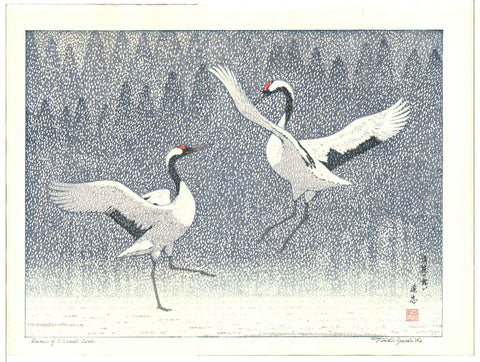
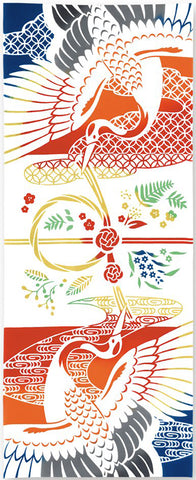
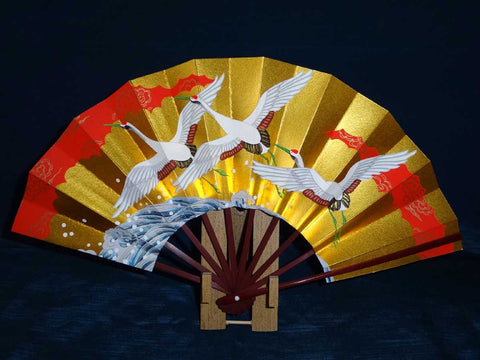
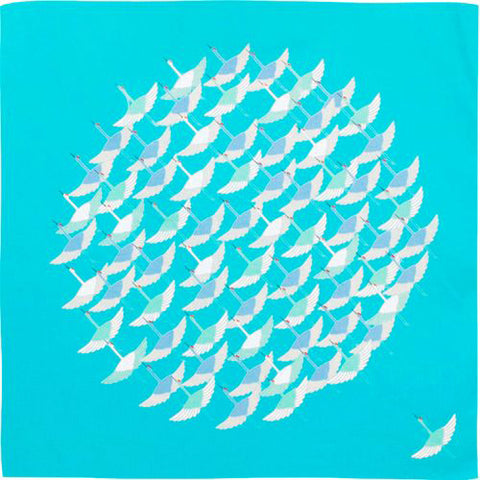
Cranes: Along with the tortoise, the crane has long been revered as an auspicious creature—symbolized by the saying "cranes live a thousand years, tortoises ten thousand"—and is considered a bird of longevity. In Chinese legend, the deity Jurōjin is said to have ridden a crane to summon the Eight Immortals. In Japan, too, the elegant crane is deeply cherished, and its image appears in a wide variety of arts, from *maki-e* lacquerware to ceramics. This auspicious motif, featuring a gorgeous pattern perfect for celebrations, symbolizes victory, family harmony, and longevity, conveying an air of grace and nobility.
Mount Fuji: Japan's highest peak, towering over the border between Shizuoka and Yamanashi prefectures. Mount Fuji—its summit rising far above the clouds—is a symbol of Japan and has long been cherished by the Japanese people as a spiritual home. Registered as a World Heritage site in 2013, it is widely known internationally as a magnificent mountain that embodies Japan and its culture. It is regarded as a deeply revered and auspicious symbol—a harbinger of good fortune and luck—and serves as an auspicious motif that evokes the very image of Japan.
Cherry Blossoms—Synonymous with Japan, the cherry blossom is the nation's official flower. Prized for their magnificent beauty, these blossoms have long inspired designs across a wide range of art forms, including paintings and traditional crafts. Whether in full, glorious bloom or gently scattering their petals, cherry blossoms create a festive atmosphere and remain an immensely popular motif.
Pine—Able to retain its greenery even while enduring harsh winds, snow, and bitter cold, the pine is a symbol of longevity. Its dignified appearance has long been admired, making it a frequent subject in Iro-Nabeshima and Ko-Imari ceramics. Exuding an air of nobility, the pine is a classic, auspicious motif believed to attract good fortune, and it remains highly popular to this day.