Product Name
Fujii Kinsai Arita Japan - Somenishiki Kinsai Flower & Birds vase 30.50 cm
(Sagi, Peacock, Crane, Pine, Bamboo, Plum, Sakura, Yanagi, Wisteria, Sazanka, Chrysanthemum,Peony, Seigaiha.)
染錦金彩花鳥図飾り花瓶
Limited edition piece; includes a bookmark detailing the artist's ceramic career.
Signed by the artist. Comes in a wooden box.
All of our products are all handmade and hand painted by Master Fujii Kinsai,
therefore each individual item are slightly different each other.
This is a peerless ceramic masterpiece, created by a master potter using techniques backed by the long history and tradition of Arita ware; the piece was shaped on a potter's wheel with the artist pouring their entire focus into the tip of the brush. It is a magnificent work that allows you to truly appreciate the splendor of Japanese traditional craftsmanship, making it suitable for display in an alcove (*tokonoma*), entryway, reception room, or living area. We invite you to add this valuable piece to your art collection.
"Kinsai" (gold decoration) is a traditional Arita ware style characterized by intricate ornamentation. The process involves applying glaze over underglaze blue painting and firing at 1,300°C; then, traditional Arita colored enamels (red, green, blue, yellow, etc.) are applied and fired at 800°C; finally, gold is used to add decorative patterns. Because the piece is fired once for each color applied, the creation process requires five to ten separate firings. The result is a gorgeous, dignified style that combines brilliant gold decoration with inventive color schemes and layouts.
Peacock
Peacock feathers are exceptionally beautiful, and the bird has long been cherished as a symbol of Paradise. Although not native to Japan, the peacock became widely known through motifs originating in China and elsewhere; its beautiful appearance has inspired designs in countless paintings and crafts, including treasures housed in the Shosoin Repository. The peacock exudes a dazzling radiance, offering a magnificent and awe-inspiring presence.
Crane
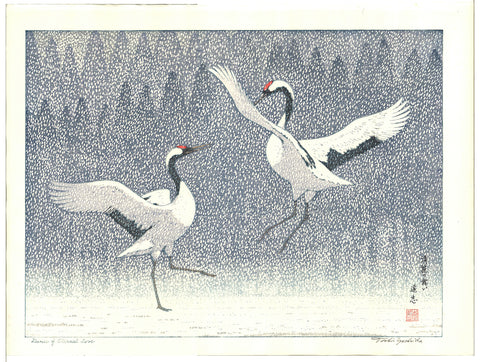
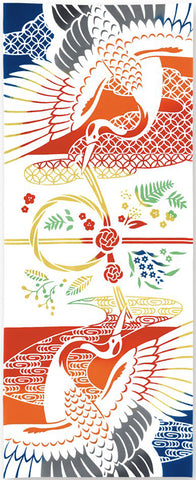
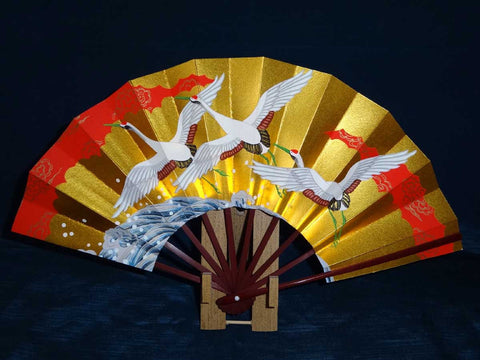
Along with the turtle, the crane has long been revered as an auspicious creature—symbolized by the saying "cranes live a thousand years, turtles ten thousand"—and is celebrated as a bird of longevity. In Chinese legend, the deity Jurojin is said to have ridden a crane to summon the Eight Immortals. In Japan, too, the elegant crane is deeply loved, and its motif appears in a wide variety of arts, from *maki-e* lacquerware to ceramics. It is a splendid, auspicious motif—perfect for celebrations—that symbolizes military victory, family harmony, and longevity, while conveying a sense of grace and nobility. Heron (*Sagi*)
Because herons often fly to watersides near human settlements—more so than cranes—they have long been familiar to people and revered as sacred birds. In China, the word for heron (*lu*) is a homophone for the word for path or road (*lu*), associating the bird with the auspicious concept of a smooth, prosperous journey through life. Influenced by this, the heron motif has been widely adopted in Japanese art, appearing in *maki-e* lacquerware, ceramics, and more. Standing quietly with an air of noble purity, the heron is a popular auspicious motif.
Peony (*Botan*)
With its magnificent, large blossoms and noble bearing, the peony has long been known in China as the "King of Flowers" and a symbol of wealth and honor. In Japan, too, the peony’s spectacular beauty has made it a popular motif in paintings, crafts, and other art forms. It is an auspicious pattern that conveys a sense of elegant gentleness amidst its splendor.
Wisteria (*Fuji*)
Wisteria is a tree that grows wild in the mountains and fields, producing beautiful clusters of flowers. It is a plant that has deeply influenced Japanese culture, appearing frequently in classical literature and serving as the surname and family crest of the powerful Fujiwara clan during the Heian period. Its graceful appearance has long been admired, leading to its frequent depiction on ceramics, *maki-e*, and lacquerware. With its grace and elegance, the wisteria remains a highly popular motif today.
Pine, Bamboo, and Plum (*Sho-chiku-bai*)
The pine and bamboo—which retain their green foliage even amidst wind, snow, and bitter cold—and the plum—which blooms earlier than other plants—are revered as symbols of longevity, integrity, and purity. The pine represents steadfastness and enduring life; the bamboo signifies moral integrity and constancy; and the plum is celebrated for its pure fragrance and refined elegance. Long used in decorations and ceramics, this combination forms a gorgeous, celebratory pattern that serves as a classic symbol of good fortune.
Cherry Blossom (*Sakura*)
The cherry blossom is so beloved that it is synonymous with flowers in Japan, and it serves as the country's national flower. With its magnificent appearance, this motif has long been incorporated into a wide variety of art forms, including paintings and decorative crafts. It captures the image of cherry blossoms in full bloom—or petals gently fluttering down—and is a highly popular pattern that evokes a festive, elegant atmosphere.
**Chrysanthemum (Kiku)**
The chrysanthemum serves as the emblem of the Imperial Family. Renowned for its exquisite shape, color, and fragrance, it frequently appears in Old Imari and Iro-Nabeshima ceramics. Along with the orchid, plum blossom, and bamboo, it is one of the "Four Gentlemen" (Shikunshi)—a group of plants deeply cherished as auspicious symbols.
**Seigaiha (Blue Ocean Waves)**
This is a geometric pattern featuring fan-shaped waves layered in an alternating arrangement. Its perfected beauty as a traditional design appeals to everyone, and it has long been a staple motif in Iro-Nabeshima and Old Imari wares. It is an auspicious pattern embodying the wish for a peaceful life that endures forever—much like the ceaseless, repeating waves of the vast, open ocean.
**Kikko (Tortoiseshell Pattern)**
This geometric pattern consists of regular hexagons and is named for its resemblance to the shell of a tortoise. It has a long history, appearing even among the treasures of the Shosoin Repository. Its perfected traditional beauty is widely admired, and it frequently adorns Arita and Imari ceramics. As the tortoise is a symbol of longevity, and the hexagonal structure (akin to a honeycomb) is renowned for its incredible strength and stability, this pattern is considered auspicious, representing a wish for eternal prosperity.
Condition
Limited Edition Products by Master Fujii Kinsai Arita Saga Japan.
The number of each production are very limited
and we sell only AAA+ (Finest quality item only).
Material
Using real Gold
Vase Size
Height 30.50 cm (12.001 ")
Diameter 30.50 cm (12.001 ")
Delivery Time
We will ship your order within 10days.