Product Name
Fujii Kinsai Arita Japan - Reproduced Koimari Somenishiki Kinsai Karakusa wari Genroku beauty Ornamental plate 61.50 cm
(Sakura, Chrysanthemum, Pomegrante,Peony,Genroku beauty, Karakusa Monyou)
倣・古伊万里染錦金彩唐草割元禄美人絵飾り大皿(径61.5cm)
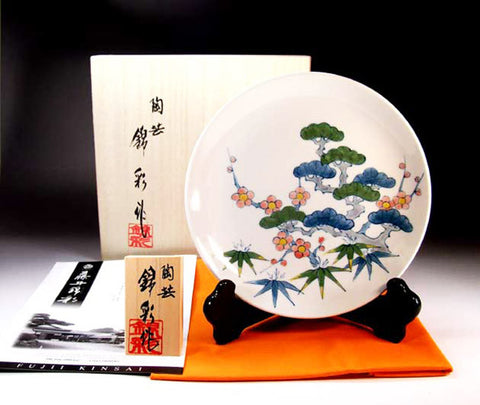
Limited edition piece; includes a bookmark detailing the artist's ceramic career.
Signed by the artist. Comes in a wooden box.
All of our products are all handmade and hand painted by Master Fujii Kinsai,
therefore each individual item are slightly different each other.
*Kinsai* (Gold Decoration)
*Kinsai* is a traditional Arita ware style characterized by a multi-stage firing process. It begins with underglaze blue painting followed by glazing and firing at 1,300°C. Next, traditional Arita overglaze enamels (in colors such as red, green, blue, and yellow) are applied and fired at 800°C. Finally, gold is used to add decorative patterns. Because the piece is fired after the application of each color, the creation of a single work involves five to ten separate firings. The result is a magnificent, dignified style that combines brilliant gold decoration with inventive color schemes and layouts.
Old Imari Style
Ceramics produced in the Hizen region (modern-day Saga and Nagasaki prefectures) from the late 17th to the late 18th century were exported to Europe via the port of Imari. Consequently, these ceramics came to be known both domestically and internationally as "Imari ware" (or "Old Imari") after the port from which they were shipped. Characterized by deep blue underglaze tones, lavish use of red and gold enamels, and intricate floral patterns covering the entire surface, this style is thought to reflect the prosperous spirit of the Genroku era. Hizen ceramics exported to Europe were highly prized and displayed in royal palaces and aristocratic mansions. The elegant, magnificent style that captivated 17th-century Europe remains beloved today, standing as a representative style of Arita ware that has been passed down to the present.
*Karakusa* (Arabesque)
The *karakusa* (arabesque) pattern depicts the intertwining vines of a plant. Arita ware features a wide variety of these patterns, including *kiku-karakusa* (chrysanthemum arabesque), *botan-karakusa* (peony arabesque), and *kiri-karakusa* (paulownia arabesque)—which combine vines with flowers, leaves, or fruit—as well as the *tako-karakusa* (octopus arabesque) pattern, named for its resemblance to the suction cups on an octopus's tentacles. Admired by all for the perfected beauty of this traditional design, the arabesque pattern frequently appears on Arita and Imari ware pieces. The *karakusa* (arabesque) pattern is a traditional auspicious design; because the vines extend endlessly in all directions, it is said to symbolize longevity and prosperity.
Condition
Limited Edition Products by Master Fujii Kinsai Arita Saga Japan.
The number of each production are very limited
and we sell only AAA+ (Finest quality item only).
Material
Using real Gold
Plate Size
Diameter 61.50 cm (24.213 ")
Delivery Time
We will ship your order within 10days.