

Fujii Kinsai Arita Japan - Kosometsuke Goldfish Vase 24.40 cm 倣・古染付金彩金魚絵飾り花瓶② - Free Shipping
Product Name
Fujii Kinsai Arita Japan - Kosometsuke Goldfish Vase 24.40 cm
倣・古染付金彩金魚絵飾り花瓶②
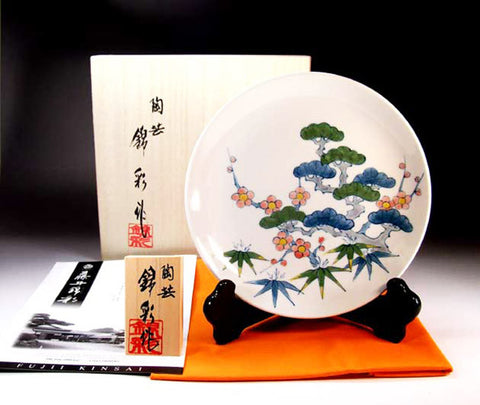
Limited edition piece; includes a bookmark detailing the artist's ceramic career.
Signed by the artist. Comes in a wooden box.
All of our products are all handmade and hand painted by Master Fujii Kinsai,
therefore each individual item are slightly different each other.
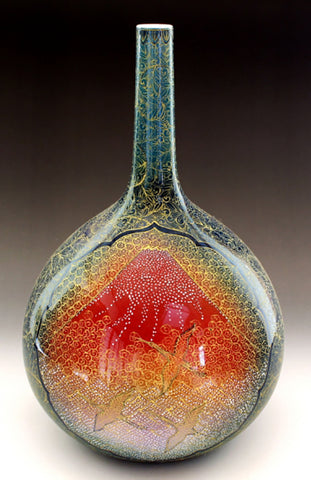
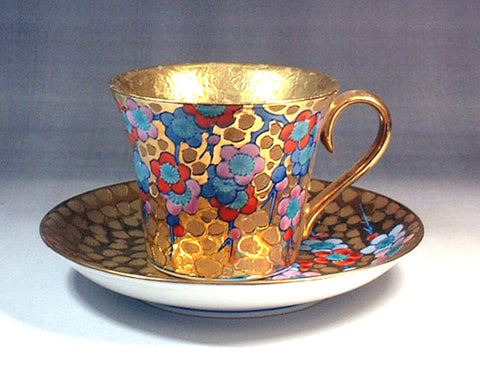
*Kinsai* (gold decoration) is a traditional Arita ware style characterized by a multi-stage process: underglaze painting is followed by glazing and firing at 1,300°C; then, traditional Arita overglaze enamels (red, green, blue, yellow, etc.) are applied and fired at 800°C; finally, gold accents are added to create intricate patterns. Because the piece is fired after the application of each color, a single work may undergo five to ten separate firings. The result is a magnificent, dignified style that combines brilliant gold decoration with inventive color schemes and layouts.
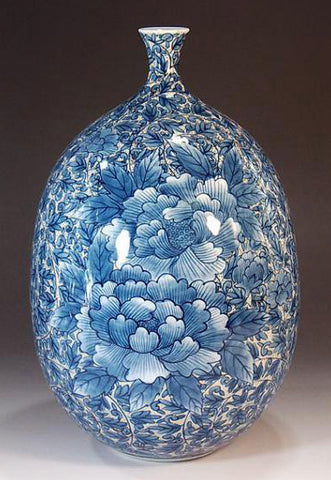
*Sometsuke* refers to ware decorated with patterns in a single shade of indigo blue. This technique originated in Arita 400 years ago. An underglaze design is painted onto the porcelain body using a pigment known as *gosu* (composed of cobalt oxide, manganese, iron, kaolin, etc.); a transparent glaze is then applied over it, and upon firing, the design develops its characteristic indigo hue. The shade of blue varies depending on factors such as the amount of cobalt oxide, the glaze composition, the porcelain clay, and the firing method—producing everything from vivid indigo to pale tones or deep, dark-tinged hues. Appreciating these subtle nuances and the unique character of the color is one of the true pleasures of *sometsuke*. Introduced to Arita via China and Korea, this style is celebrated for its elegance and beauty, combining the warmth of white porcelain with simple, refined indigo painting.
Goldfish (*Kingyo*)
It is said that the goldfish originated from a red mutation of the crucian carp (*hibuna*) discovered in China around the 4th century. Introduced to Japan during the late Muromachi period, the goldfish became a popular subject for appreciation and display. In Chinese, the word for "fish" (*yu*) shares the same pronunciation as the word for "abundance" or "surplus" (*yu*); consequently, the goldfish is regarded as an auspicious symbol of prosperity and wealth. In Japan, the goldfish has been depicted in various forms, including haiku poetry, *kyoka* (humorous verse), and ceramics. With their charming appearance and evocative, modern appeal, goldfish motifs are highly popular as symbols of good fortune.
Condition
Limited Edition Products by Master Fujii Kinsai Arita Saga Japan.
The number of each production are very limited
and we sell only AAA+ (Finest quality item only).
Material
Using real Gold
Vase Size
Height 24.40 cm (9.606 ")
Diameter 22.80 cm (8.976 ")
Delivery Time
We will ship your order within 10days.


We Also Recommend