

Fujii Kinsai Arita Japan - Kosometsuke Peony & Karakusa Japanese Teacup (Yunomi) 5 Units set 古染付牡丹唐草文様汲出揃 - Free Shipping
Product Name
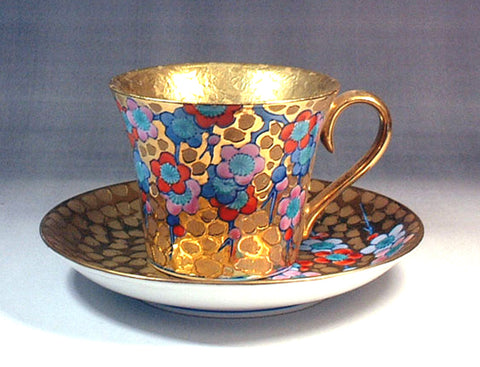
Fujii Kinsai Arita Japan - Kosometsuke Peony & Karakusa Japanese Teacup (Yunomi) 5 Units set
古染付牡丹唐草文様汲出揃
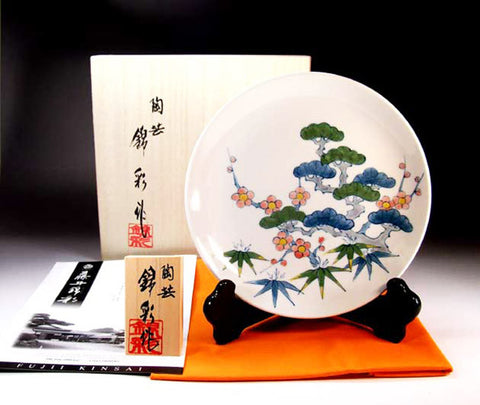
Limited edition piece; includes a bookmark detailing the artist's ceramic career.
Signed by the artist. Comes in a wooden box.
All of our products are all handmade and hand painted by Master Fujii Kinsai,
therefore each individual item are slightly different each other.
Master Fujii's autographed on back side of all work.
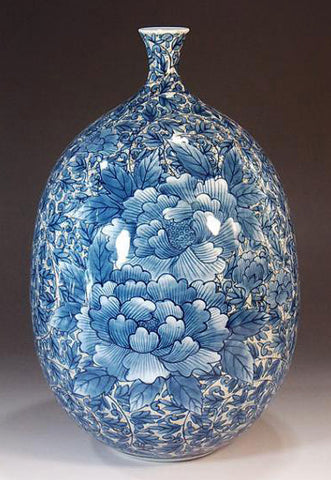
*Sometsuke* refers to ware decorated with patterns in a single blue color; this style originated in Arita 400 years ago. The process involves painting an underglaze design onto the porcelain body using a pigment known as *gosu*—composed of materials such as cobalt oxide, manganese, iron, and kaolin—and then applying a transparent glaze before firing, which causes the design to emerge in a blue hue. The shade of blue varies depending on the amount of cobalt oxide used, the glaze, the porcelain clay, and the firing method; the resulting colors range from vivid indigo to pale tones or deep, dark-tinged hues. Appreciating these subtle variations and the unique character of the color is one of the true pleasures of *sometsuke*. Introduced to Arita via China and Korea, the style is characterized by an elegant beauty, combining the warmth of white porcelain with the simplicity of single-color blue painting.
**Peony (*Botan*)**
With its magnificent, large blossoms and noble bearing, the peony has long been known in China as the "King of Flowers" and a symbol of wealth and honor. In Japan, too, the peony’s spectacular beauty has inspired its use in a wide variety of designs, from paintings to decorative crafts. It is an auspicious motif that conveys a sense of elegant gentleness amidst its splendor.
**Arabesque (*Karakusa*)**
The *karakusa* (arabesque) pattern depicts the intertwining vines of a plant. Arita ware features a diverse array of these patterns, including designs that combine vines with flowers, leaves, or fruit—such as chrysanthemum, peony, and paulownia arabesques—as well as the "octopus arabesque" (*tako-karakusa*), named for its resemblance to the suction cups on an octopus's tentacles. As a perfected traditional design, it is universally admired and frequently appears on Arita and Imari ware. Because the arabesque pattern extends endlessly in all directions without interruption, it is considered an auspicious motif symbolizing longevity and prosperity.
Condition
Limited Edition Products by Master Fujii Kinsai Arita Saga Japan.
The number of each production are very limited
and we sell only AAA+ (Finest quality item only).
Size
Height 5.50 cm (2.165 ")
Diameter 8.40 cm (3.307 ")
Delivery Time
We will ship your order within 10 days.


We Also Recommend